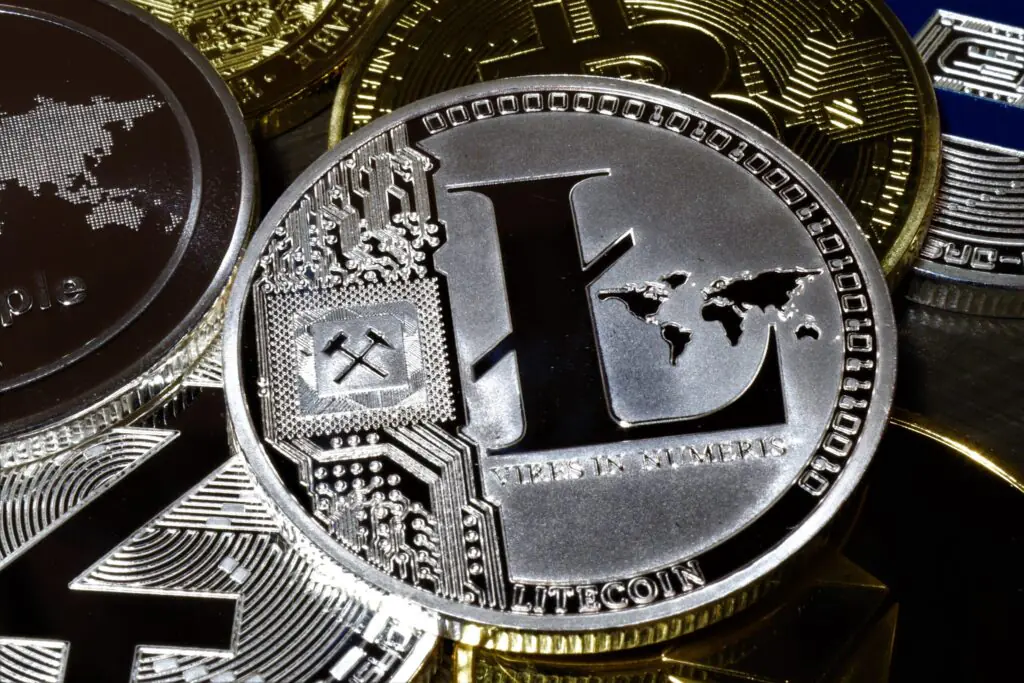
“I already paid you—in Litecoin.”
That was not just a debtor’s excuse. It became the central issue in Lee Ee Foong v Ong Seow Lee [2025] 10 MLJ 230, where the High Court held that a debt can be discharged with cryptocurrency if the creditor agrees to accept it, even though cryptocurrency is not legal tender in Malaysia.
The lender appealed. On 27 July 2026, the Court of Appeal unanimously dismissed the appeal in Ong Seow Lee v Lee Ee Foong [2026] 9 CLJ 139 and affirmed the High Court’s decision. Its judgment sets out the principle more precisely, and makes clear where its limits lie.
Background Facts
The dispute arose from a joint venture between two friends to mine cryptocurrency. In December 2017, each agreed to contribute RM70,000 towards the purchase of Bitcoin mining machines. The venture did not produce the returns they had hoped for, and in early 2018 they agreed to treat one party’s contribution as a friendly loan to the other.
The cryptocurrency generated by the venture was credited to a Binance wallet opened in the lender’s name. The lender admitted that at least 50 Litecoins (LTC) were in her wallet and that she could see them there. The borrower said the parties had agreed, by telephone and later at meetings, that those 50 Litecoins would repay the loan. The lender denied any such agreement.
In 2020, the lender demanded repayment of RM70,000 in cash, and later sued for it. The borrower pleaded that the loan had already been paid with the 50 Litecoins. He also counterclaimed RM17,134.56, saying the Litecoins were then worth RM87,134.56, which was more than the loan.
The Magistrate’s Court ruled for the lender. It accepted that the Litecoins were in her wallet, but held that they were not repayment because she had not received RM70,000 in cash. In the Magistrate’s view, if the Litecoins had value, the borrower should have sold them and paid her the cash.
The High Court’s Decision
The High Court overturned the Magistrate’s decision and held that the debt had been fully discharged.
The Court emphasised that the real issue was not whether cryptocurrency is legal tender in Malaysia. Instead, the question was whether the parties had agreed that the Litecoins would repay the loan. The lender knew the Litecoins were in her wallet, knew they had value, asked the borrower to help her sell them, and never rejected or returned them. On those facts, the High Court found that she had accepted the 50 Litecoins as full repayment.
The High Court did, however, dismiss the borrower’s counterclaim for the RM17,134.56 “overpayment”, as it did not accept his valuation of the Litecoins.
The Court of Appeal’s Decision
The lender obtained leave to appeal. The Court of Appeal (Mohamed Zaini Mazlan, Faizah Jamaludin and Aliza Sulaiman JJCA) unanimously dismissed the appeal. Delivering the judgment of the court, Faizah Jamaludin JCA framed the case this way:
At its heart, this is not a case about whether cryptocurrency is money or legal tender. It is about party autonomy: whether a creditor agreed to accept a specified digital asset in satisfaction of a monetary debt.
Ong Seow Lee v Lee Ee Foong [2026] 9 CLJ 139, at [2]
Legal Tender versus Agreed Satisfaction
Under section 10 of the Currency Act 2020, only notes and coins issued by Bank Negara Malaysia are legal tender. Litecoin plainly is not. But the Court held that this did not answer the question.
Section 64 of the Contracts Act 1950 allows a creditor to accept “any satisfaction which he thinks fit” in place of the performance originally promised. This is known as accord and satisfaction: the accord is the creditor’s agreement to accept something else, and the satisfaction is that something else being provided. A creditor who is owed money can therefore agree to take a lesser sum, goods, services or another asset instead.
The Court drew a clear line:
- A debtor cannot, without the creditor’s agreement, discharge a monetary debt by tendering cryptocurrency.
- Cryptocurrency can, however, be valid satisfaction where the creditor agrees, either expressly or by conduct, to accept it for that purpose.
The Court noted that Malaysian decisions, including Robert Ong Thien Cheng v Luno Pte Ltd & Anor [2019] 1 LNS 2194, have recognised cryptocurrency as an asset to which value attaches. The legal effect, however, comes from the creditor’s agreement to accept the asset, not from describing it as money or legal tender.
Was There an Agreement to Accept the Litecoins?
The borrower bore the burden of proving that the debt had been discharged. The Court agreed with the lender that the presence of the Litecoins in her wallet, and her knowledge that they had value, were not enough on their own. A digital asset can be credited to a wallet without the recipient ever agreeing to accept it as payment.
What tipped the balance was the borrower’s direct evidence of the oral agreement, considered together with the lender’s own conduct:
- the wallet was in her name, and she had access to it and monitored its balance;
- she discussed the value of the Litecoins, and converting them, with the borrower;
- she asked the borrower to help her sell them because she needed money; and
- she never rejected the Litecoins or asked for them to be returned.
There was also no evidence of any arrangement under which the lender could keep the Litecoins and still be repaid RM70,000 in cash.
Market Volatility and Valuation
The lender argued that Litecoin’s volatility, and the lack of any agreed conversion rate, meant it could not count as repayment. The Court disagreed. Volatility may affect whether a creditor is willing to accept a digital asset, but it does not deprive the asset of value or undo an agreement once that agreement is proved. Section 64 allows a creditor to accept an asset whether or not its market value matches the debt exactly, and the court will not re-price the agreed substitute because its value later rises or falls.
The same point cut against the borrower. No valuation was agreed or proved, so there was no basis to find that he had overpaid, and the dismissal of his counterclaim stood.
The Binance Argument
The lender also relied on the Securities Commission’s 2021 action against Binance for operating as an unregistered digital asset exchange. The Court held that this did not determine whether the loan was discharged. The parties’ dealings took place before that action, and the regulatory status of an exchange does not make every asset held on it valueless or every private transfer void.
What the Court of Appeal Did Not Decide
The Court was careful to keep its decision narrow:
Our decision is confined to the contractual issue before us. We do not hold that cryptocurrency is legal tender. Nor do we hold that the unilateral transfer of cryptocurrency discharges a debt denominated in Ringgit Malaysia. Mere receipt, silence or passive retention will not establish satisfaction.
Ong Seow Lee v Lee Ee Foong [2026] 9 CLJ 139, at [80]
Whether a creditor has agreed to accept cryptocurrency is a question of fact in each case, and it is for the debtor to prove that agreement on the balance of probabilities.
Why This Decision Matters
The judgment does not mean that cryptocurrency has become legal tender in Malaysia. Rather, it reinforces a fundamental principle of contract law: parties are generally free to decide how their contractual obligations are to be performed.
A debt need not always be repaid in cash. If both parties agree, it may be discharged by transferring another asset that has recognised value, including cryptocurrency.
More broadly, the decision shows that the courts are willing to apply settled contract principles to modern commercial transactions. Instead of asking whether cryptocurrency is “money”, both the High Court and the Court of Appeal focused on two practical questions:
- Did the parties agree to use cryptocurrency as repayment?
- Did the creditor accept that repayment?
As the answer to both questions was yes, the debt was discharged. With the Court of Appeal’s decision, that approach now has appellate backing.
Key Takeaway
Ong Seow Lee v Lee Ee Foong confirms that cryptocurrency can serve not only as an investment asset, but also as a valid means of repaying a debt, provided the creditor agrees to accept it.
For businesses and individuals dealing with digital assets, a few practical points follow from the case:
- If you are repaying in cryptocurrency, put the agreement in writing. With no written record, the borrower here had to rely on his own word, supported by the lender’s conduct, to prove the agreement.
- Agree how the asset will be valued. Without an agreed rate or valuation date, the borrower could not recover what he said was an overpayment.
- If you are owed money and do not want cryptocurrency, say so promptly and return it. Treating the asset as your own can be taken as acceptance.
In simple terms: if you do not want to be paid in cryptocurrency, do not accept it in the first place. Once a creditor knowingly accepts cryptocurrency as the agreed mode of repayment, the creditor is unlikely to be allowed to keep the digital assets and still demand the same debt in cash.

Have a question on a related matter? Reach out to our partner.
Get in touch